Airports · Terminals — the building never closes, the desk does
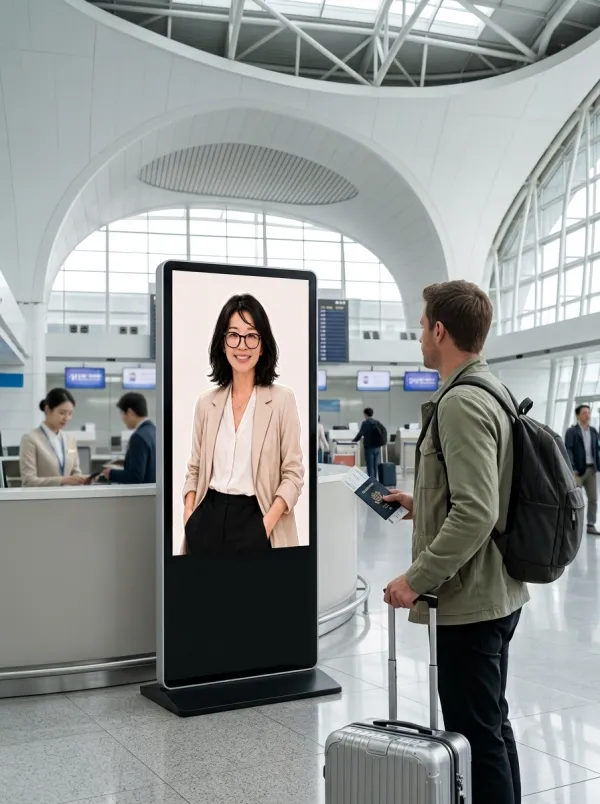
A terminal is busiest at the hours when the fewest staff are on shift, and the people who need help most are the ones who cannot read the signs. MijA stands in the concourse and answers the questions that do not need a uniform, in the language the traveller opens with, at three in the morning as readily as at noon.
What goes wrong on this floor
- A traveller with a two hour connection spends twenty minutes of it looking for the transfer desk, because the sign assumes you already know which terminal you are in.
- The information counter is staffed in two languages and the departure board is serving forty nationalities.
- Static kiosks answer by menu, which is no use to a traveller who does not know the word for what they are looking for, and no use at all to someone who cannot see the screen.
How MijA actually responds
Why this industry needs on-premise
MijA gives directions. She does not take part in security screening, immigration or any check on who a person is, and she is not connected to systems that do. That line matters more from 2 August 2026, because the EU AI Act treats border management and identity checking as high-risk uses with their own conformity regime. A guidance assistant that stays firmly on the public side of that line stays out of it, and the way to keep it there is to keep it physically separate. MijA runs on a machine in the terminal, on its own network segment, with no link to security or border systems.
There is a second reason airports care. The European Accessibility Act has applied to self-service terminals since June 2025, and a touchscreen that only works if you can see it and read it is now a problem you have to fix. MijA is answered by speaking, which is the interaction mode a screen-only kiosk cannot offer. And under Article 50 of the AI Act she tells every traveller she is an AI before the conversation starts.
How it is deployed
One MijA unit in the arrivals hall and one at the transfer corridor entrance, fed from your own flight information display feed over the local network. No outbound internet connection is required. Language set is chosen from your actual route map rather than a default list. Bus and rail terminals typically run a single unit at the main concourse.